
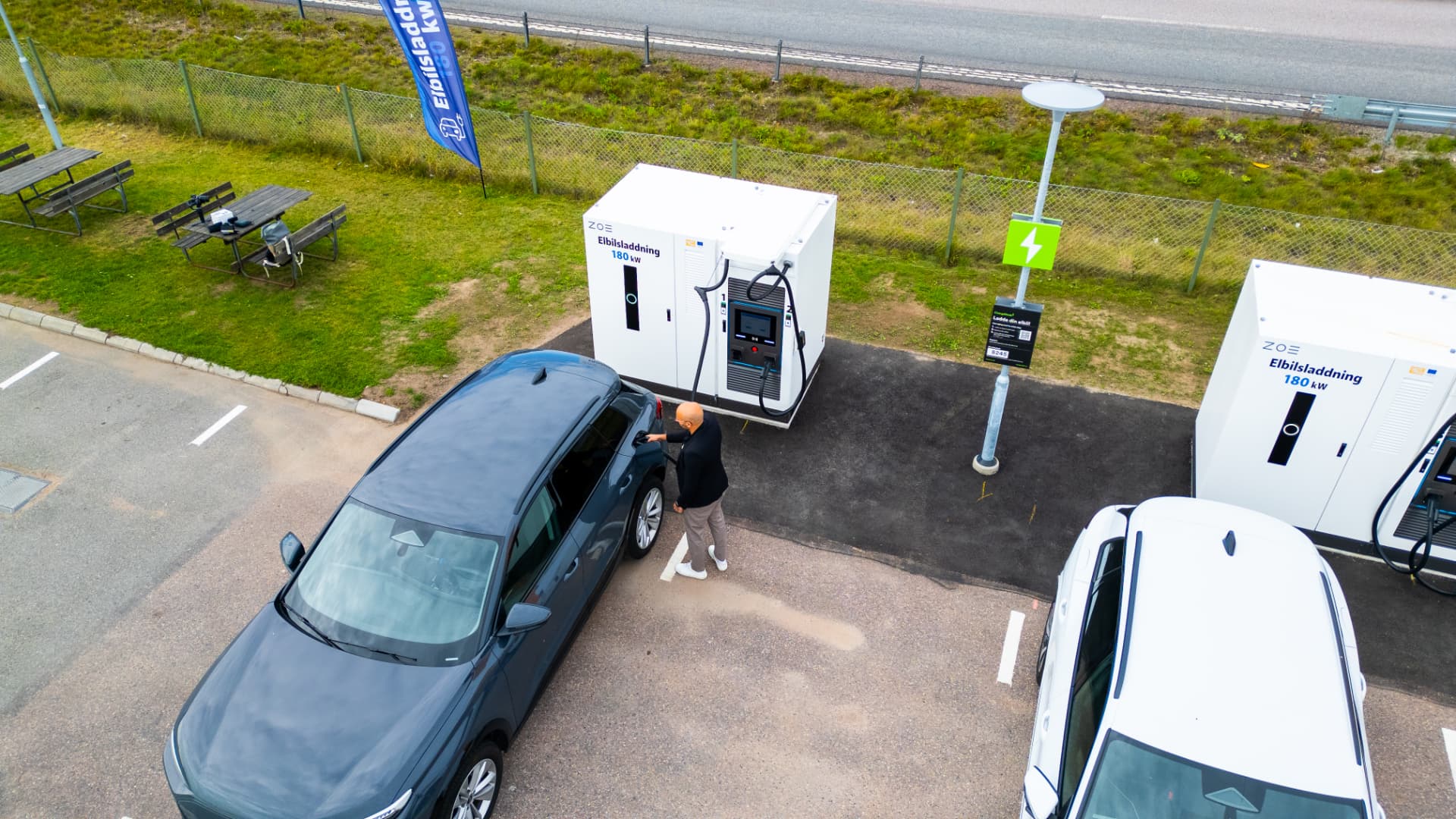
Transport and logistics
Charge your fleet efficiently within the limits of your existing grid connection.
Fleet electrification increases momentary power demand at terminals and depots. Emaldo's DC rapid charging solution is combined with battery storage to absorb charging peaks. This allows charging infrastructure to be built around the existing grid connection without an immediate need for connection upgrades.
Three reasons
Why energy storage pays off
Manage charging peaks
The battery absorbs peak loads from simultaneous vehicle charging, reducing the peak power required from the grid.
60–240 kW as needed
The modular power of the EM-C240 can be sized from 60 to 240 kW and expanded as charging needs grow.
Security of supply for terminals
Battery storage can protect the terminal's critical loads during power cuts and voltage fluctuations.
Typical applications
- Logistics centres and terminals
- Charging stations for transport companies
- Ports and distribution centres
- Urban logistics charging points
Solutions for this need
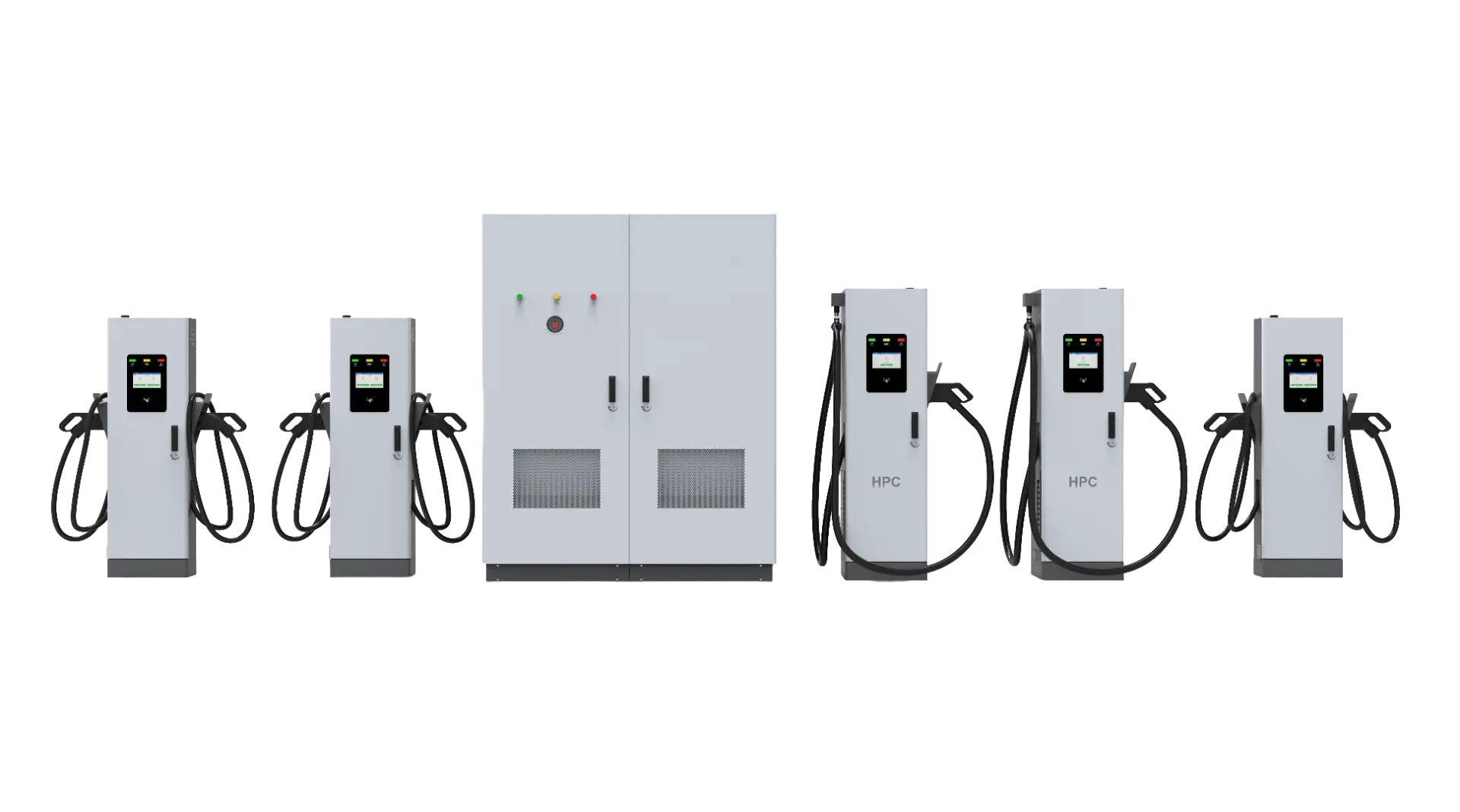
Emaldo EM-C240
Modular 60–240 kW DC fast charger for fleets, charging hubs, and commercial sites.
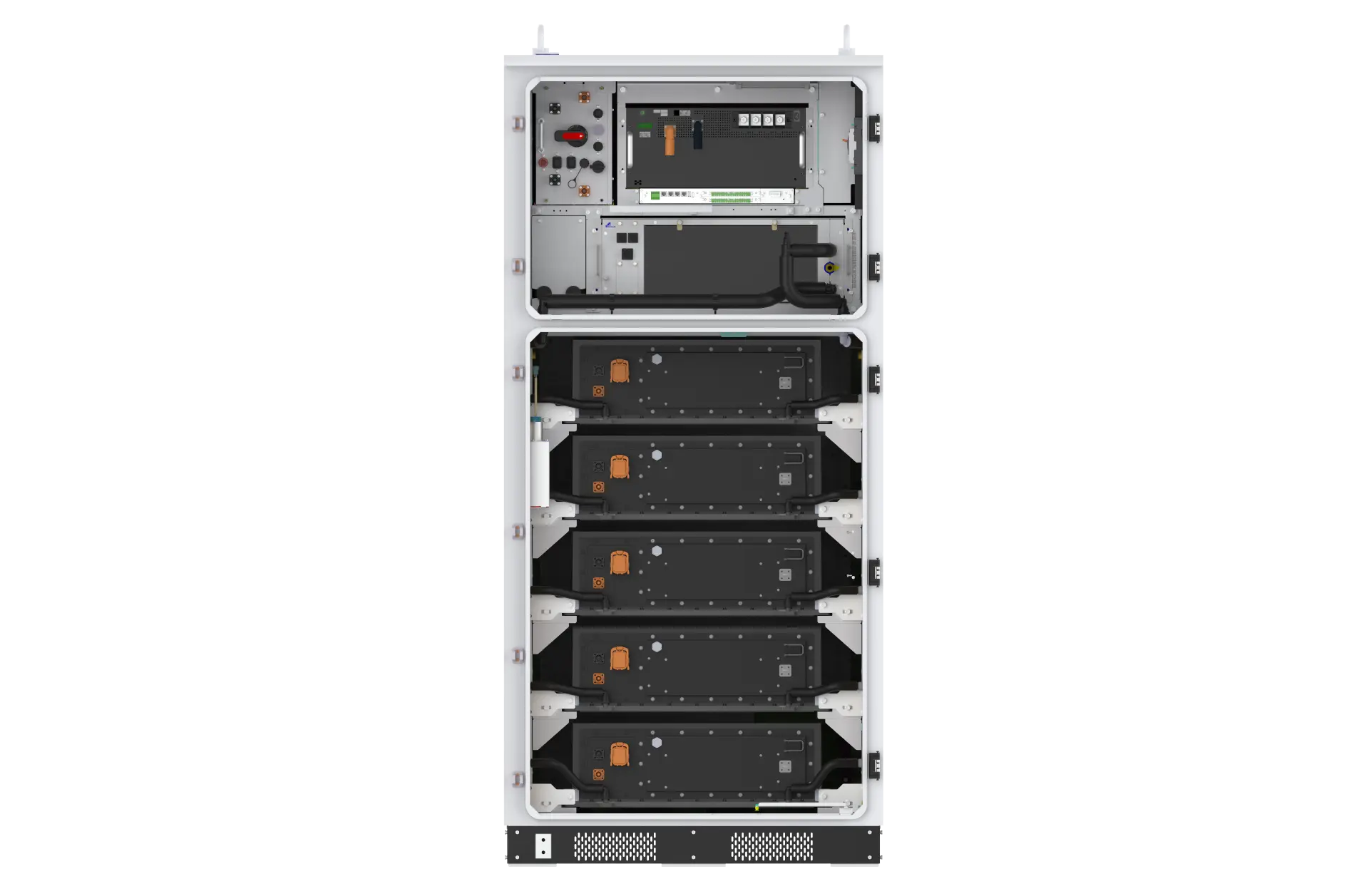
Emaldo PL-EL-125/261
A 125 kW / 261 kWh energy storage system shaves charging power peaks within your existing grid connection.
The basics
Energy storage supporting heavy vehicle charging
In battery-assisted fast charging, the energy storage system supplements the power available from the grid connection during charging. This allows charging power at a terminal or depot to be scaled up without drawing all instantaneous power from the grid. The solution is always evaluated alongside load management and grid connection upgrades.
Sites where peak charging demand is decisive
- Lorry and bus depots
- Logistics terminals and distribution centres
- Ports and heavy machinery charging
- Fast opportunity charging for urban logistics
- Sites where upgrading the grid connection is slow or expensive
Sizing
Four key inputs for a charging solution
The required power is determined by the energy transferred to the vehicles and the available charging window. The battery is sized to cover the gap between the charging demand and the power safely available from the grid connection.
- 1Number of vehicles and daily energy demand
- 2Arrival, departure, and dwell times
- 3Charger concurrency and target DC charging power
- 4Grid connection capacity, other property loads, and future fleet expansion
A battery does not replace all grid planning
If high charging power is continuous and the battery cannot recharge between cycles, upgrading the grid connection or transformer may still be necessary. The comparison takes into account grid connection costs, load management, battery losses, duty cycles, and expansion plans.
Frequently asked questions
Questions about energy storage
How does a battery help with heavy fleet fast charging?
The battery provides supplementary power alongside the grid connection during charging, recharging when other consumption and charging demands are lower.
Can the existing grid connection be retained?
It may be possible if the grid connection provides enough energy to recharge the battery and the battery covers brief power peaks. This is verified using load and charging profiles.
What is the difference between load management and battery storage?
Load management distributes available power among chargers. In addition, battery storage can temporarily deliver more power than can be drawn from the grid connection.
Can the same battery serve the property at other times?
Yes. Outside charging sessions, the battery can shave property peak loads, optimise electricity costs, or participate in reserve markets, depending on the site.
Sources and updates
Content reviewed 8.10.2026. Market terms, tariffs and technical suitability are always checked for each site.
Savings calculator
Size your energy storage system to suit your site
Estimated demand charge savings, price arbitrage and payback period. Prices VAT 0 %.
Estimated annual benefit · VAT 0 %
10 148 €/v
We recommend: Emaldo PL-EL-100/209 · 100 kW / 209 kWh
- Huipunleikkaus (tehomaksu)−14,5 kW620 €
- Price arbitrage (energy)2 403 €
- Transmission + tax, including efficiency losses−375 €
- Reservimarkkinat (Floor/Market/Tolling)7 500 €
Assumption: 250 cycles/year, discharge period 2 h, peak 121 kW, data: Esimerkkidata: FI-aluehinnat 10/2025–9/2026.
Request precise sizingSources: Caruna Oy price list 1.9.2024; Caruna Espoo 1.1.2026; Elenia large customer price list 1.4.2026 (product names inferred from the PDF, check the source); electricity tax from Elenia's 1.4.2026 price list. Helen Sähköverkko's business price list has not been verified: use 'Custom tariff'. Spot data: Nord Pool FI area prices (Elering, valitsesahko.fi), monthly average prices 10/2025–9/2026 and hourly profiles for January, April and July 2026 and October 2025, excluding VAT. Profiles for other months are derived from the nearest seasonal profile, so day-to-day variation is missing and the arbitrage estimate is a conservative lower bound. Prices are historical, not forecasts. Industry profiles are approximations, not measured data; actual peaks are often sharper. Reserve market revenues: Floor 55 000 €/MW/year and Tolling 75 000 €/MW/year (Watti, 8.10.2026), Market estimate varies (benchmark Clean Horizon Battery Index 2h). The model excludes load control, electricity storage tariffs offered by distribution network operators and financing costs. All prices VAT 0 %.
Read more