
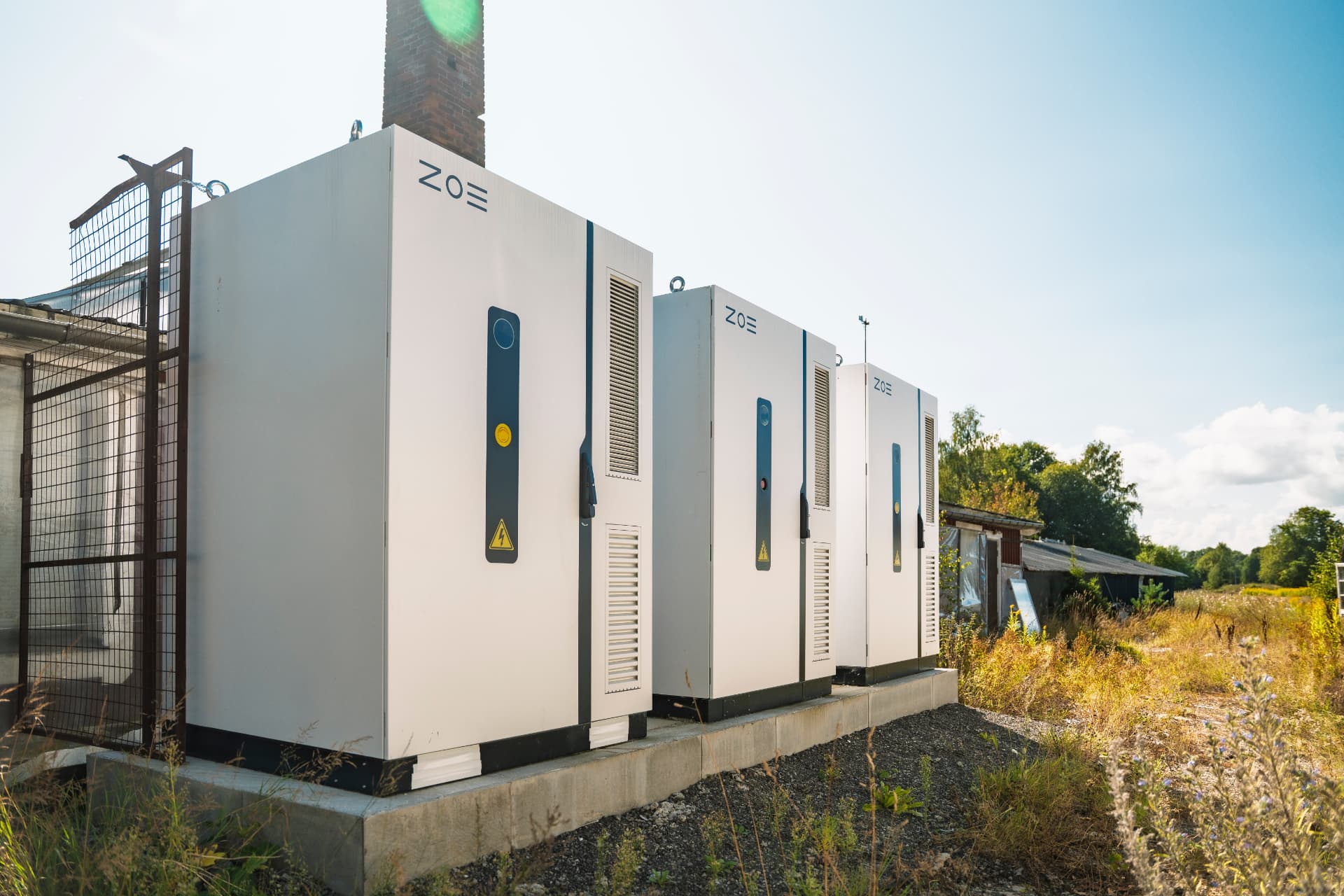
Industry
Turn energy into a competitive advantage for your production.
Emaldo's commercial solution combines battery storage, expert design, installation and ongoing support. The system helps cut costs by shaving peak loads and optimising tariff and spot prices, protects critical loads, and enables energy flexibility to be used as a source of revenue.
Three reasons
Why energy storage pays off
Lower demand charges
The battery responds to momentary power demands, shaves peak consumption drawn from the grid, and optimises tariff and spot prices every 15 minutes.
Business continuity
Backup power helps keep production lines, cooling equipment, servers and other critical loads running during power cuts and voltage fluctuations.
Returns from reserve markets
Spare battery capacity can be harnessed for grid flexibility. The revenue model can be chosen from market returns, a Floor model with guaranteed minimum earnings, or a fixed Tolling fee.
Typical applications
- Machine shops and manufacturing plants
- Process industry
- Cold storage and freezer facilities
- Sites with high demand charges
Solutions for this need
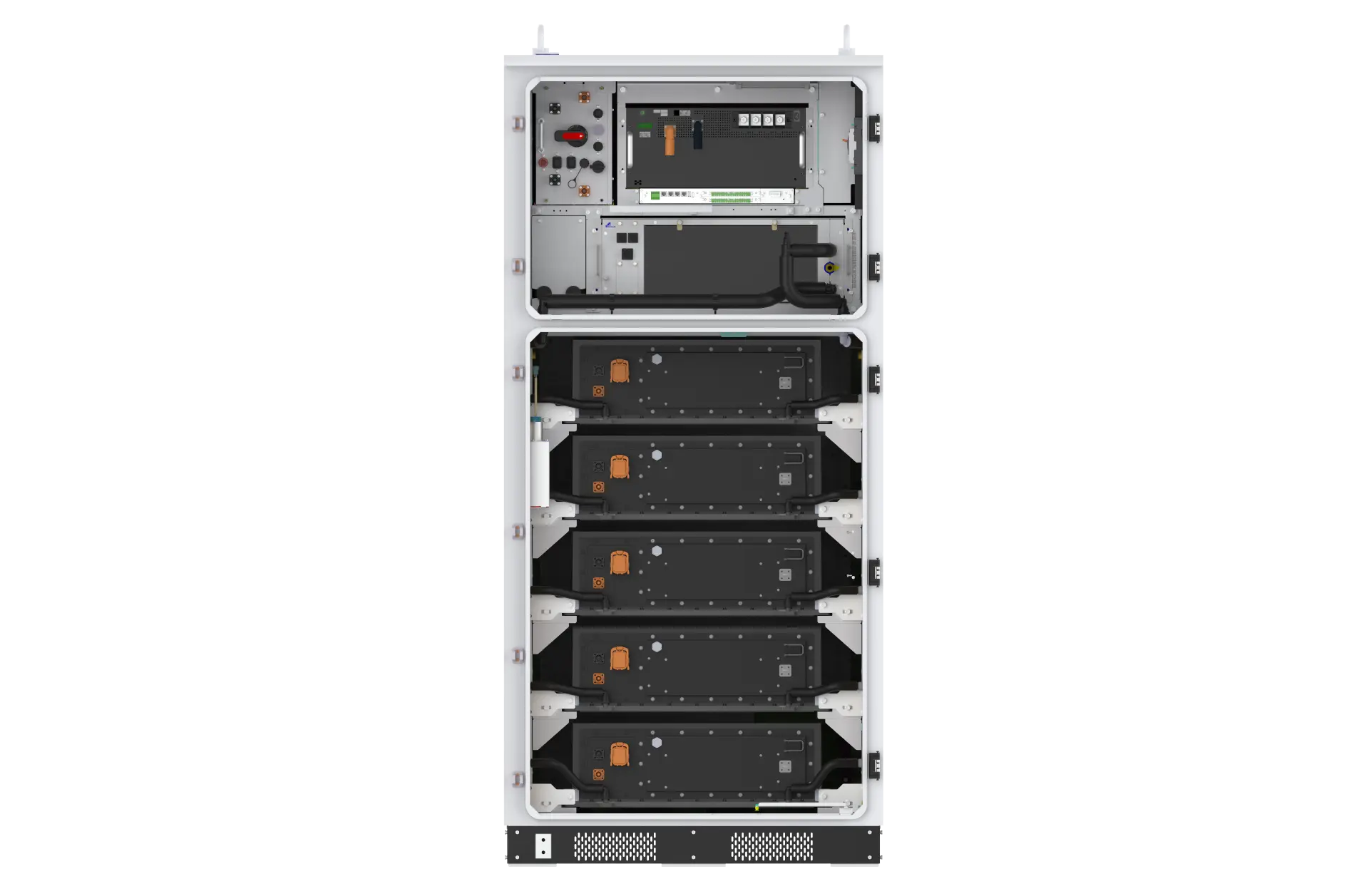
Emaldo PL-EL-125/261
125 kW / 261 kWh all-in-one solution for industrial peak shaving, backup power and energy flexibility.
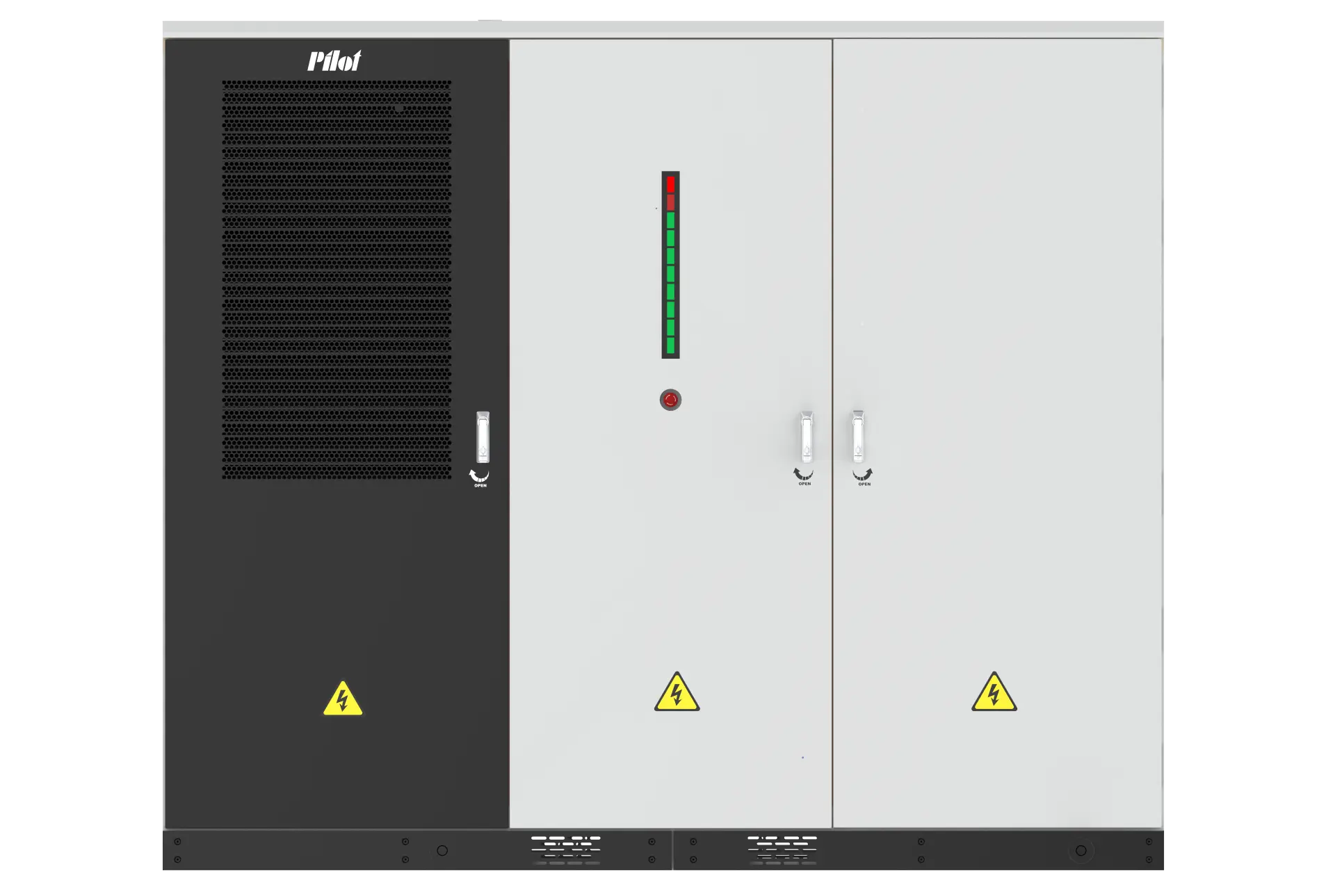
Emaldo PL-EL-250/836-G400 and PL-EL-400/836-G400
250 or 400 kW power and 836 kWh capacity for larger industrial, warehouse and infrastructure sites.
The basics
What is an industrial energy storage system?
An industrial energy storage system or battery storage system (BESS) is part of a production facility's energy management. It can shave consumption peaks in production, shift electricity use to cheaper periods, store on-site generation, and support critical loads. EMS control aligns operating modes with production requirements.
Where does an industrial battery deliver value?
- In short load spikes at machine shops and manufacturing halls
- In demand response for processes and electric boilers
- In continuous loads at cold stores and freezer warehouses
- In increasing self-consumption of solar power
- In securing critical production loads
Sizing
Initial data for sizing an industrial battery
Battery power is sized according to the peak to be shaved and critical loads. Capacity is determined by peak duration, the energy shifted, and backup power targets.
- 115-minute consumption data and production shifts
- 2Monthly peaks and demand charge calculation
- 3Grid connection and transformer capacity
- 4Power requirements of critical processes and permissible downtime
- 5Future electrification and EV charging investments
Production determines the operating strategy
Battery control must not compromise the process, power quality, or backup power reserve. Savings and revenue estimates are tied to site data. Solutions regarding LFP technology, cooling, fire safety, monitoring, and maintenance are always verified from the documentation and site design of the chosen Emaldo system.
Frequently asked questions
Questions about energy storage
Is an industrial battery the same as a battery container?
Not always. An industrial battery can be an indoor or outdoor cabinet system or a larger battery container. The implementation is chosen based on required power, capacity, space, and safety requirements.
How does an industrial battery reduce demand charges?
The battery discharges energy during production consumption peaks, reducing the peak demand measured from the grid. The effect depends on the grid operator's tariff calculation method and proper battery sizing.
Can a battery support production during a power cut?
Yes, if the system is designed for backup power use and critical loads are segregated. A standard grid-tied battery alone does not ensure island mode operation.
What does EMS mean?
An EMS, or Energy Management System, controls battery charging and discharging based on factors such as consumption, power limits, electricity price, on-site generation, and backup power reserves.
Sources and updates
- Motiva: Demand response as part of energy management
- Motiva: Industrial energy audits and energy analysis
- National Emergency Supply Agency: Backup power guidelines
Content reviewed 8.10.2026. Market terms, tariffs and technical suitability are always checked for each site.
Knowledge hub
Read more on this topic
- Demand Charge GuideDemand charges are based on your highest average power demand in a month, not on total energy consumed. This guide explains how peaks occur, how they are metered and how battery storage effectively cuts them.Businesses and industry · 5 min read
- Reserve Market GuideBattery storage can sell its capacity to Fingrid's reserve markets, generating annual returns regardless of your electricity consumption. This guide covers markets, systems, required steps, and an honest calculation example.Businesses and industry · 6 min read
Savings calculator
Size your energy storage system to suit your site
Estimated demand charge savings, price arbitrage and payback period. Prices VAT 0 %.
Estimated annual benefit · VAT 0 %
10 148 €/v
We recommend: Emaldo PL-EL-100/209 · 100 kW / 209 kWh
- Huipunleikkaus (tehomaksu)−14,5 kW620 €
- Price arbitrage (energy)2 403 €
- Transmission + tax, including efficiency losses−375 €
- Reservimarkkinat (Floor/Market/Tolling)7 500 €
Assumption: 250 cycles/year, discharge period 2 h, peak 121 kW, data: Esimerkkidata: FI-aluehinnat 10/2025–9/2026.
Request precise sizingSources: Caruna Oy price list 1.9.2024; Caruna Espoo 1.1.2026; Elenia large customer price list 1.4.2026 (product names inferred from the PDF, check the source); electricity tax from Elenia's 1.4.2026 price list. Helen Sähköverkko's business price list has not been verified: use 'Custom tariff'. Spot data: Nord Pool FI area prices (Elering, valitsesahko.fi), monthly average prices 10/2025–9/2026 and hourly profiles for January, April and July 2026 and October 2025, excluding VAT. Profiles for other months are derived from the nearest seasonal profile, so day-to-day variation is missing and the arbitrage estimate is a conservative lower bound. Prices are historical, not forecasts. Industry profiles are approximations, not measured data; actual peaks are often sharper. Reserve market revenues: Floor 55 000 €/MW/year and Tolling 75 000 €/MW/year (Watti, 8.10.2026), Market estimate varies (benchmark Clean Horizon Battery Index 2h). The model excludes load control, electricity storage tariffs offered by distribution network operators and financing costs. All prices VAT 0 %.
Read more