

Load shifting
Buy electricity during the cheapest hours, use it during the most expensive.
The energy storage system charges when electricity is cheap, and stored energy is used for the property's needs during peak hours. For commercial properties, the Emaldo system optimises tariff and spot prices every 15 minutes without requiring any changes to daily operations.
Three reasons
Why energy storage pays off
Automated timing
Smart control monitors spot electricity prices and schedules charging and discharging optimally.
Savings every day
Capitalising on price differences occurs several times a day – savings accumulate steadily all year round.
Combines with solar power
The same battery stores both cheap grid electricity and your own solar generation – multiplying the benefits.
Typical applications
- Spot electricity customers
- Electrically heated homes
- Businesses with consumption during peak hours
- Properties without solar panels
Solutions for this need
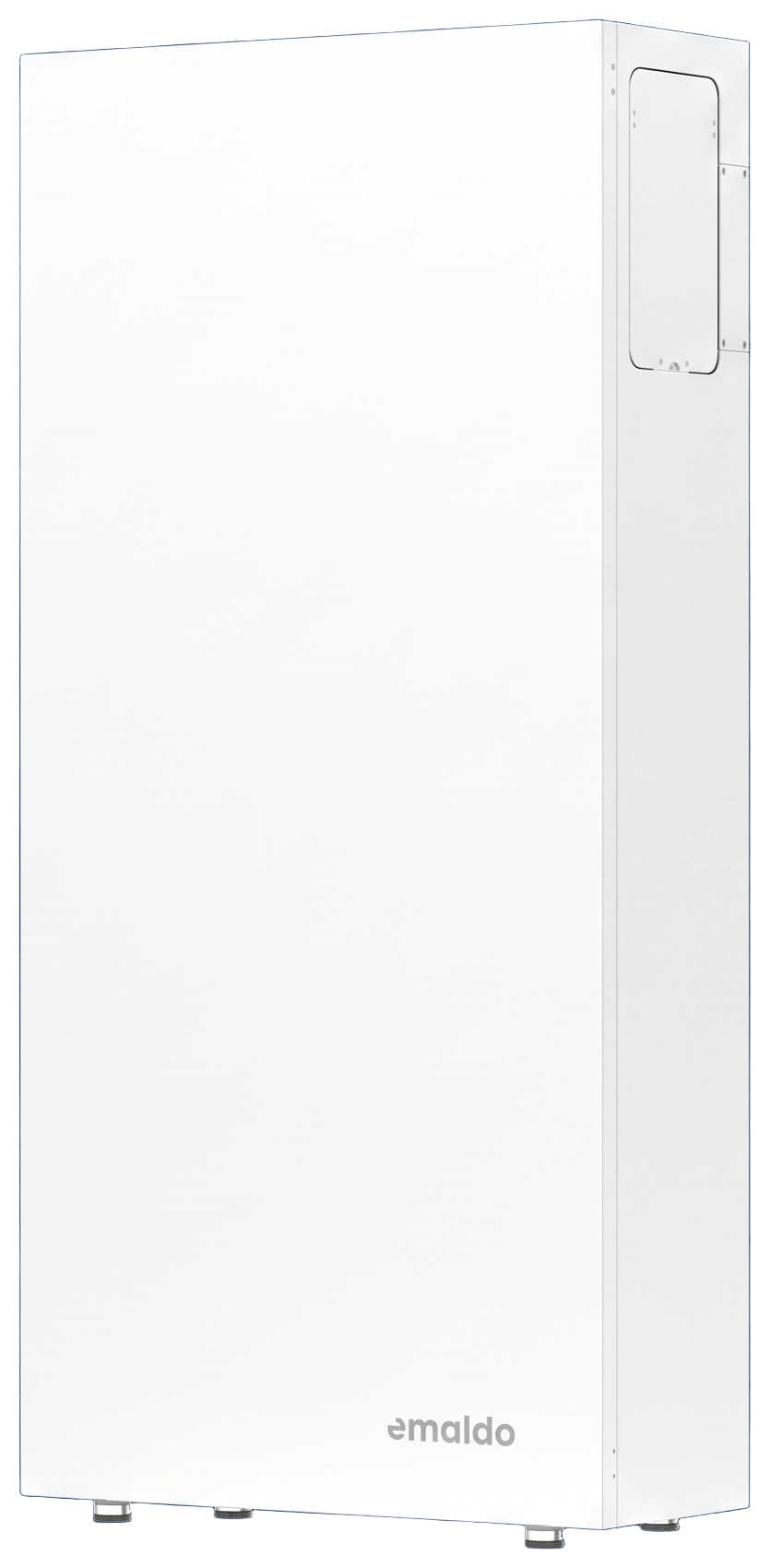
Emaldo Power Store
A home battery that charges during cheap hours and discharges during peak ones – even without solar panels. Battery storage, inverter, and solar connection in one complete unit.
Read more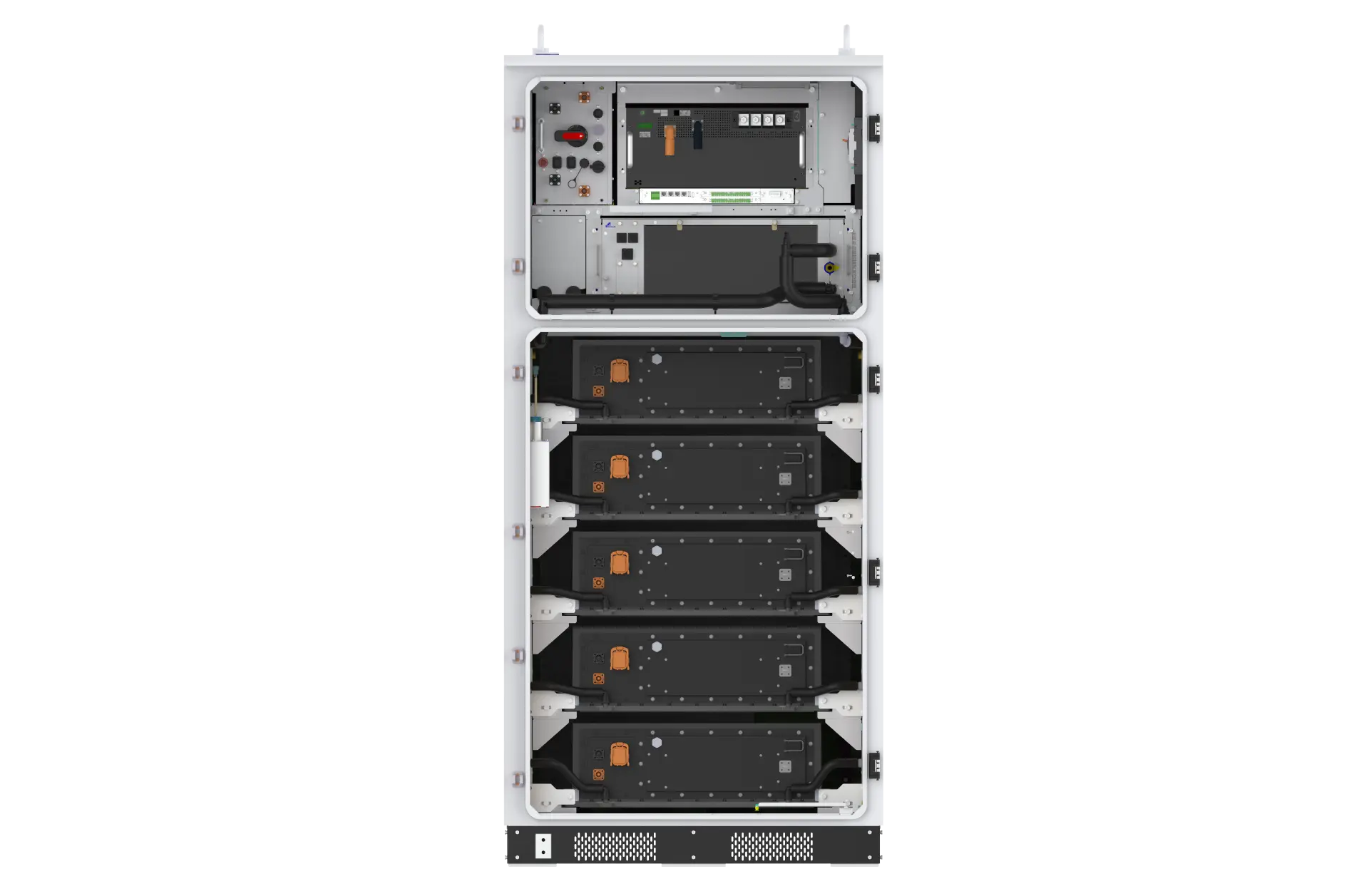
Emaldo PL-EL-125/261
125 kW / 261 kWh energy storage for optimising tariff and spot prices according to your company's consumption profile.
The basics
What does load shifting mean in electricity consumption?
Load shifting means moving electricity usage from expensive or congested periods to cheaper times. A battery achieves this without disrupting actual production or business operations: it charges on cheaper power and discharges to supply the site during peak price hours.
Load shifting and energy arbitrage
- Businesses on spot-price electricity
- Daytime-heavy consumption and large price fluctuations
- Sites where load cannot be paused due to price
- Shifting solar generation for later use
- Combined peak shaving and price optimisation
Sizing
Where does the benefit of price optimisation come from?
The gross price difference does not equal savings. The estimate takes into account charging and discharging prices, battery efficiency, transmission fees and taxes, usable capacity, and annual cycles.
- 1The site's 15-minute consumption profile
- 2Actual or selected spot prices
- 3Usable battery capacity and efficiency
- 4Limits set by charging and discharging power
- 5Priorities for power tariffs and reserve market use
The price spread alone is not enough
Every charge and discharge cycle expends energy in losses, and battery capacity may be needed simultaneously for peak shaving or backup power. The control system optimises operating modes together and does not count the same capacity towards two benefits at once.
Frequently asked questions
Questions about energy storage
Is load shifting the same as energy arbitrage?
Closely related. Load shifting describes changing the timing of electricity use. In energy arbitrage, the financial benefit arises specifically from the price difference between charging and discharging times.
Does a company need to alter its production schedule?
Not necessarily. A battery can shift when electricity is purchased, even if the production load remains unchanged.
What needs to be considered in the calculation?
In addition to the price difference, efficiency, transmission and taxes, cycles, battery power and capacity, as well as other operational priorities must be considered.
Can you cut peak loads at the same time?
The control system can combine operating modes, but the battery's limited power and capacity are divided between them. The priority order is determined by the site's goals.
Sources and updates
Content reviewed 8.10.2026. Market terms, tariffs and technical suitability are always checked for each site.
Savings calculator
Size your energy storage system to suit your site
Estimated demand charge savings, price arbitrage and payback period. Prices VAT 0 %.
Estimated annual benefit · VAT 0 %
10 148 €/v
We recommend: Emaldo PL-EL-100/209 · 100 kW / 209 kWh
- Huipunleikkaus (tehomaksu)−14,5 kW620 €
- Price arbitrage (energy)2 403 €
- Transmission + tax, including efficiency losses−375 €
- Reservimarkkinat (Floor/Market/Tolling)7 500 €
Assumption: 250 cycles/year, discharge period 2 h, peak 121 kW, data: Esimerkkidata: FI-aluehinnat 10/2025–9/2026.
Request precise sizingSources: Caruna Oy price list 1.9.2024; Caruna Espoo 1.1.2026; Elenia large customer price list 1.4.2026 (product names inferred from the PDF, check the source); electricity tax from Elenia's 1.4.2026 price list. Helen Sähköverkko's business price list has not been verified: use 'Custom tariff'. Spot data: Nord Pool FI area prices (Elering, valitsesahko.fi), monthly average prices 10/2025–9/2026 and hourly profiles for January, April and July 2026 and October 2025, excluding VAT. Profiles for other months are derived from the nearest seasonal profile, so day-to-day variation is missing and the arbitrage estimate is a conservative lower bound. Prices are historical, not forecasts. Industry profiles are approximations, not measured data; actual peaks are often sharper. Reserve market revenues: Floor 55 000 €/MW/year and Tolling 75 000 €/MW/year (Watti, 8.10.2026), Market estimate varies (benchmark Clean Horizon Battery Index 2h). The model excludes load control, electricity storage tariffs offered by distribution network operators and financing costs. All prices VAT 0 %.
Read more