

Backup power and security of supply
A power cut won't stop operations.
Power cuts and voltage fluctuations can halt production, disrupt the cold chain, or shut down services. Emaldo's commercial solution keeps production lines, refrigeration, tills, and servers running when the grid is down.
Three reasons
Why energy storage pays off
Rapid support during disruptions
Battery storage supplies power to critical loads during power cuts and voltage disturbances.
Critical operations secured
On farms, milking, feeding, ventilation, and cooling continue; in industry, critical production lines stay running.
Also for areas with a weak grid
At the end of long power lines, power cuts are common – a battery and solar panels bring self-sufficiency to holiday homes and island properties.
Typical applications
- Farms and livestock production
- Cold chains and storage facilities
- Critical industrial processes
- Holiday homes and archipelago locations
Solutions for this need
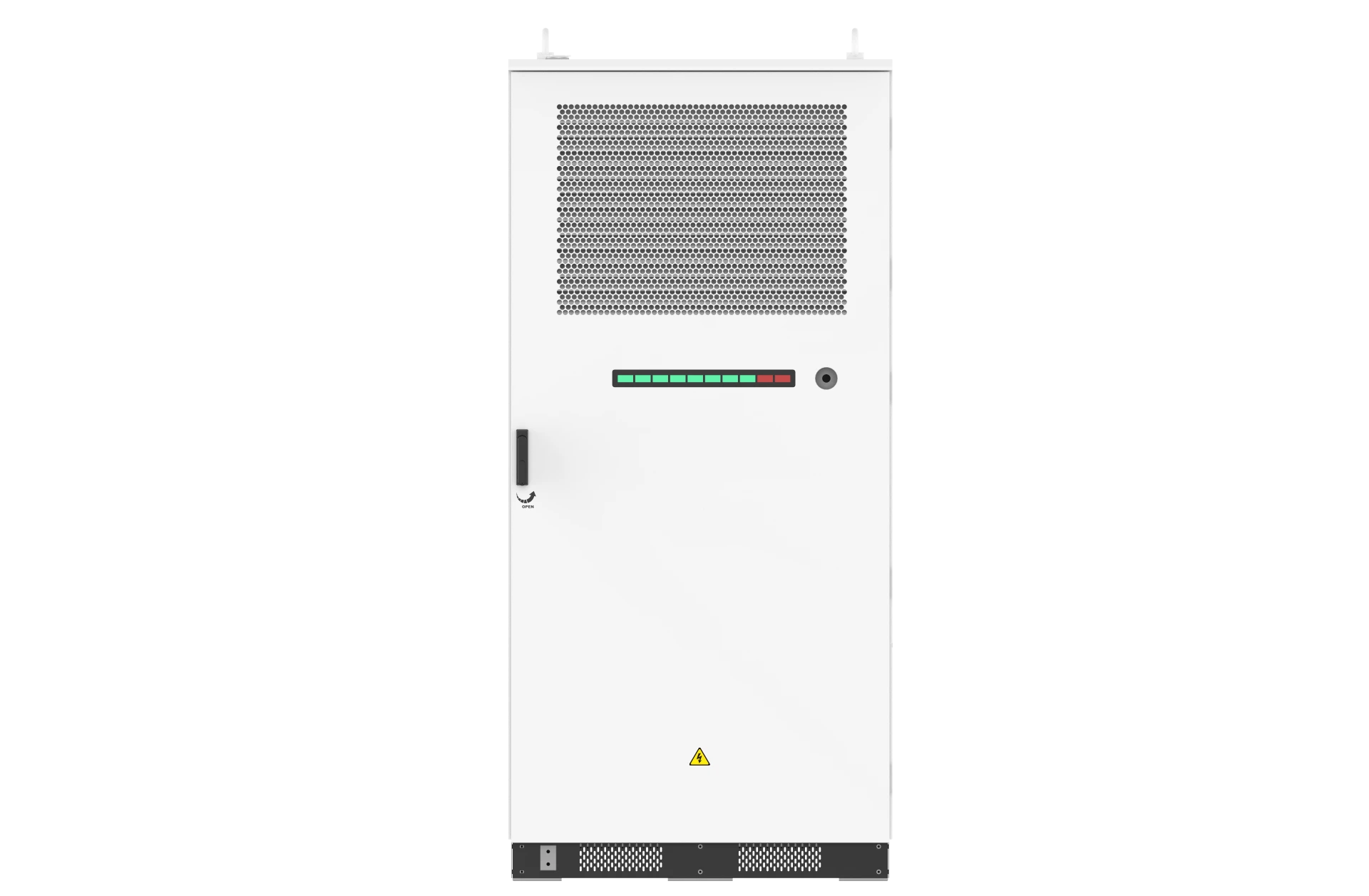
Emaldo PL-EL-100/209
A 100 kW / 209 kWh all-in-one solution for critical load continuity in commercial properties and enterprises.
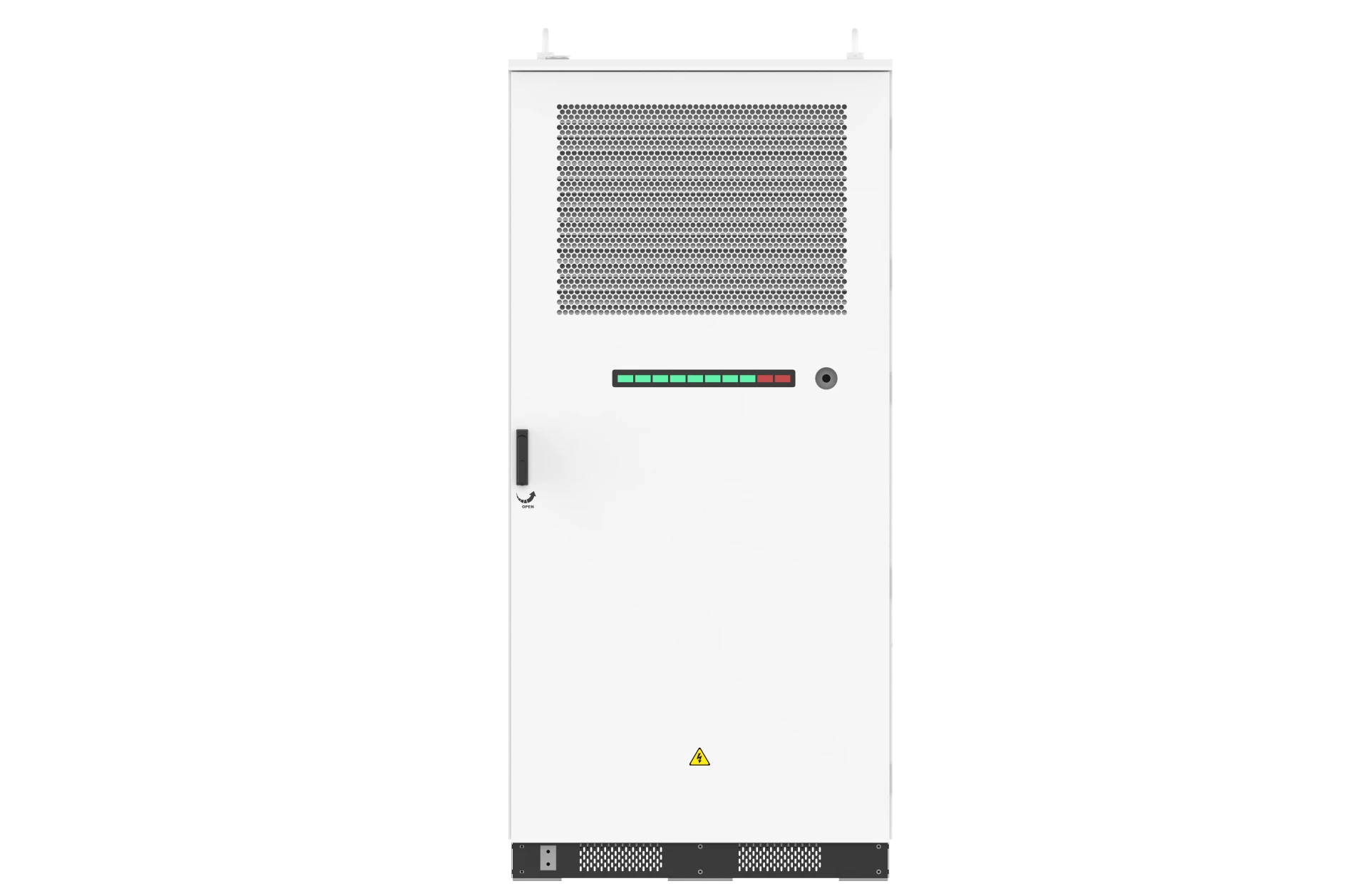
Emaldo PL-EL-125/261-G-PS100
Integrated battery, solar PV and backup power solution for farms and heavy electricity consumers.
The basics
Can an energy storage system provide backup power?
An energy storage system can serve as backup power for a business when designed for island mode (islanding) and critical loads during a power cut are clearly defined. A standard grid-tied battery does not automatically continue supplying power during an outage; this setup requires proper switchgear, protection, and control.
UPS, battery storage, or generator?
- UPS for very short outages and uninterruptible power supply to sensitive equipment
- Battery storage for fast response and pre-dimensioned backup runtimes without local emissions
- Generator for extended backup runtimes when fuel logistics can be arranged
- Hybrid setup when both rapid response and long runtime are required
- Load prioritisation when backing up all consumption is not cost-effective
Sizing
Sizing backup power
Power rating is sized according to critical loads running simultaneously. Capacity is determined by the desired runtime and the energy demand of these loads. Inrush currents and motor loads are assessed separately.
- 1Continuous and surge power of critical equipment
- 2Allowable switchover time and transfer switch requirements
- 3Target backup runtime
- 4Automated load prioritisation and shedding
- 5Recharging capabilities during prolonged outages
Operational reliability must be verified
Backup power is designed with safe grid disconnection, protection, testing, and maintenance in mind. In extended outages, battery capacity is finite, meaning a generator or other on-site generation may be necessary. The setup must always be confirmed by a qualified electrical engineer.
Frequently asked questions
Questions about energy storage
Does a standard battery work during a power cut?
Not necessarily. For safety reasons, grid-tied inverters automatically shut down during an outage. Backup power requires dedicated islanding capability and safe automatic grid disconnection.
What is the difference between a UPS and battery storage?
A UPS is designed specifically for uninterruptible power delivery to sensitive loads. Battery storage can also be used for energy optimisation, but its switchover time and suitability must be verified separately.
How long will the battery last?
Runtime depends on usable capacity and the power demand of critical loads. For example, doubling the load will roughly halve the runtime on the same capacity.
Does a battery replace a diesel generator?
For applications with short backup runtime requirements, yes. For extended outages, a generator or a hybrid system may be needed, as battery storage capacity is limited.
Sources and updates
- National Emergency Supply Agency: Backup power guidelines
- Motiva: Demand response as part of energy management
Content reviewed 8.10.2026. Market terms, tariffs and technical suitability are always checked for each site.
Knowledge hub
Read more on this topic
- Reserve Market GuideBattery storage can sell its capacity to Fingrid's reserve markets, generating annual returns regardless of your electricity consumption. This guide covers markets, systems, required steps, and an honest calculation example.Businesses and industry · 6 min read
- Backup power for power cutsYou can prepare for power cuts with a portable power station or a whole-home battery. The choice depends on which appliances you want to keep running and for how long.Households · 4 min read
Savings calculator
Size your energy storage system to suit your site
Estimated demand charge savings, price arbitrage and payback period. Prices VAT 0 %.
Estimated annual benefit · VAT 0 %
10 148 €/v
We recommend: Emaldo PL-EL-100/209 · 100 kW / 209 kWh
- Huipunleikkaus (tehomaksu)−14,5 kW620 €
- Price arbitrage (energy)2 403 €
- Transmission + tax, including efficiency losses−375 €
- Reservimarkkinat (Floor/Market/Tolling)7 500 €
Assumption: 250 cycles/year, discharge period 2 h, peak 121 kW, data: Esimerkkidata: FI-aluehinnat 10/2025–9/2026.
Request precise sizingSources: Caruna Oy price list 1.9.2024; Caruna Espoo 1.1.2026; Elenia large customer price list 1.4.2026 (product names inferred from the PDF, check the source); electricity tax from Elenia's 1.4.2026 price list. Helen Sähköverkko's business price list has not been verified: use 'Custom tariff'. Spot data: Nord Pool FI area prices (Elering, valitsesahko.fi), monthly average prices 10/2025–9/2026 and hourly profiles for January, April and July 2026 and October 2025, excluding VAT. Profiles for other months are derived from the nearest seasonal profile, so day-to-day variation is missing and the arbitrage estimate is a conservative lower bound. Prices are historical, not forecasts. Industry profiles are approximations, not measured data; actual peaks are often sharper. Reserve market revenues: Floor 55 000 €/MW/year and Tolling 75 000 €/MW/year (Watti, 8.10.2026), Market estimate varies (benchmark Clean Horizon Battery Index 2h). The model excludes load control, electricity storage tariffs offered by distribution network operators and financing costs. All prices VAT 0 %.
Read more