
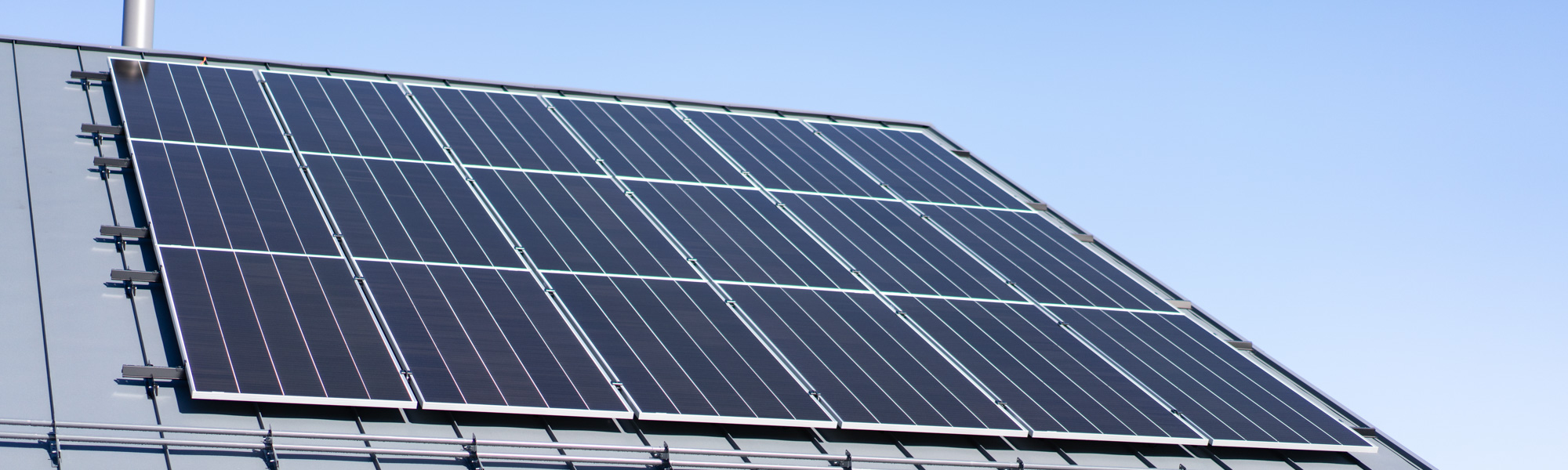
Solar energy storage
Use your own solar energy – don't sell it cheap to the grid.
A solar PV system produces the most in the middle of the day, when self-consumption is often low. Without a battery, surplus production is sold cheaply to the grid and evening electricity is bought at high prices. Energy storage shifts daytime production to evening and morning use – increasing self-consumption and boosting savings.
Three reasons
Why energy storage pays off
Self-consumption increases
Daytime surplus is stored for evening and morning consumption instead of being sold to the grid.
Works with existing systems too
Emaldo Power Store and Power Sense connect to both new and existing solar PV systems.
Scales to your needs
From 15 kWh home systems to hundreds of kilowatt-hours for farms and businesses – capacity grows as your needs expand.
Typical applications
- Homes with solar panels
- Farms and grain drying facilities
- Properties with rooftop solar installations
- Solar PV systems up to 250 kW (Hybrid)
Solutions for this need
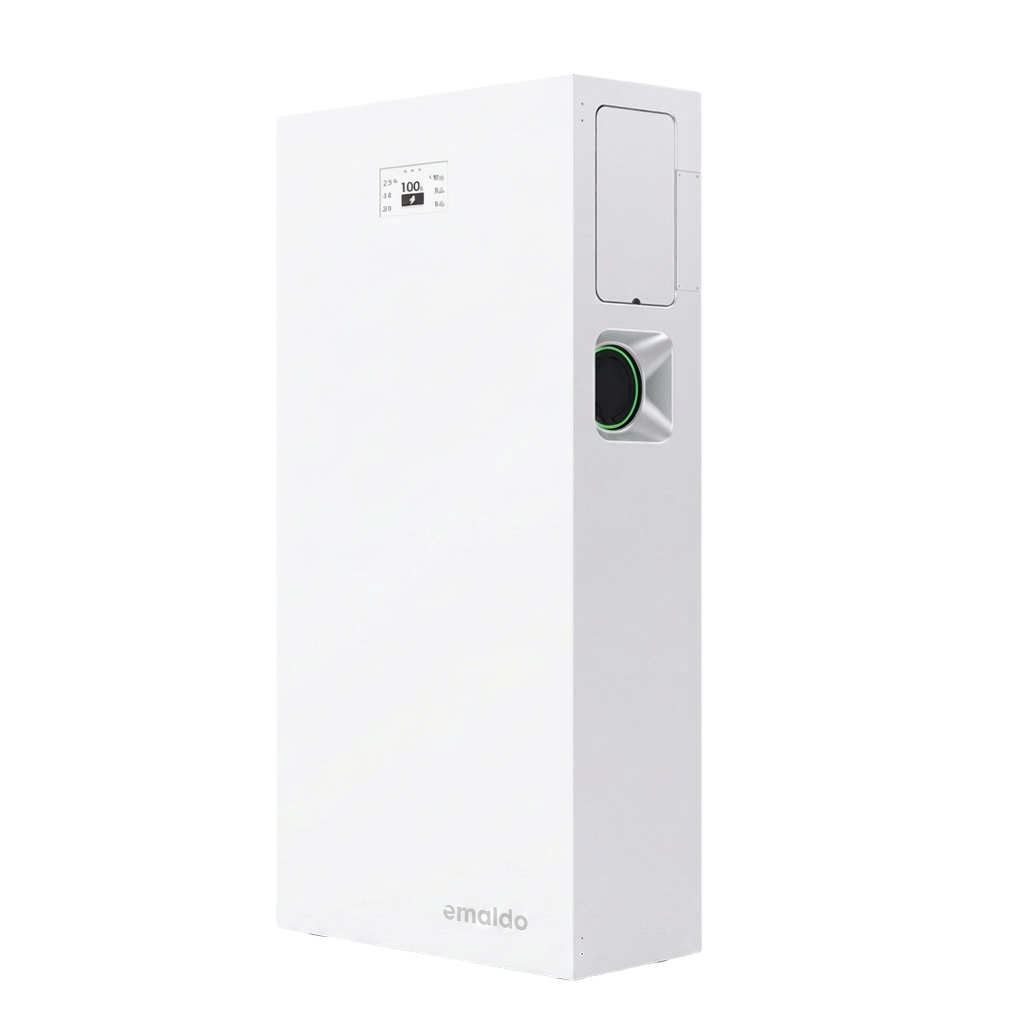
Emaldo Power Store
Expandable home battery that also connects to an existing solar PV system.
Read more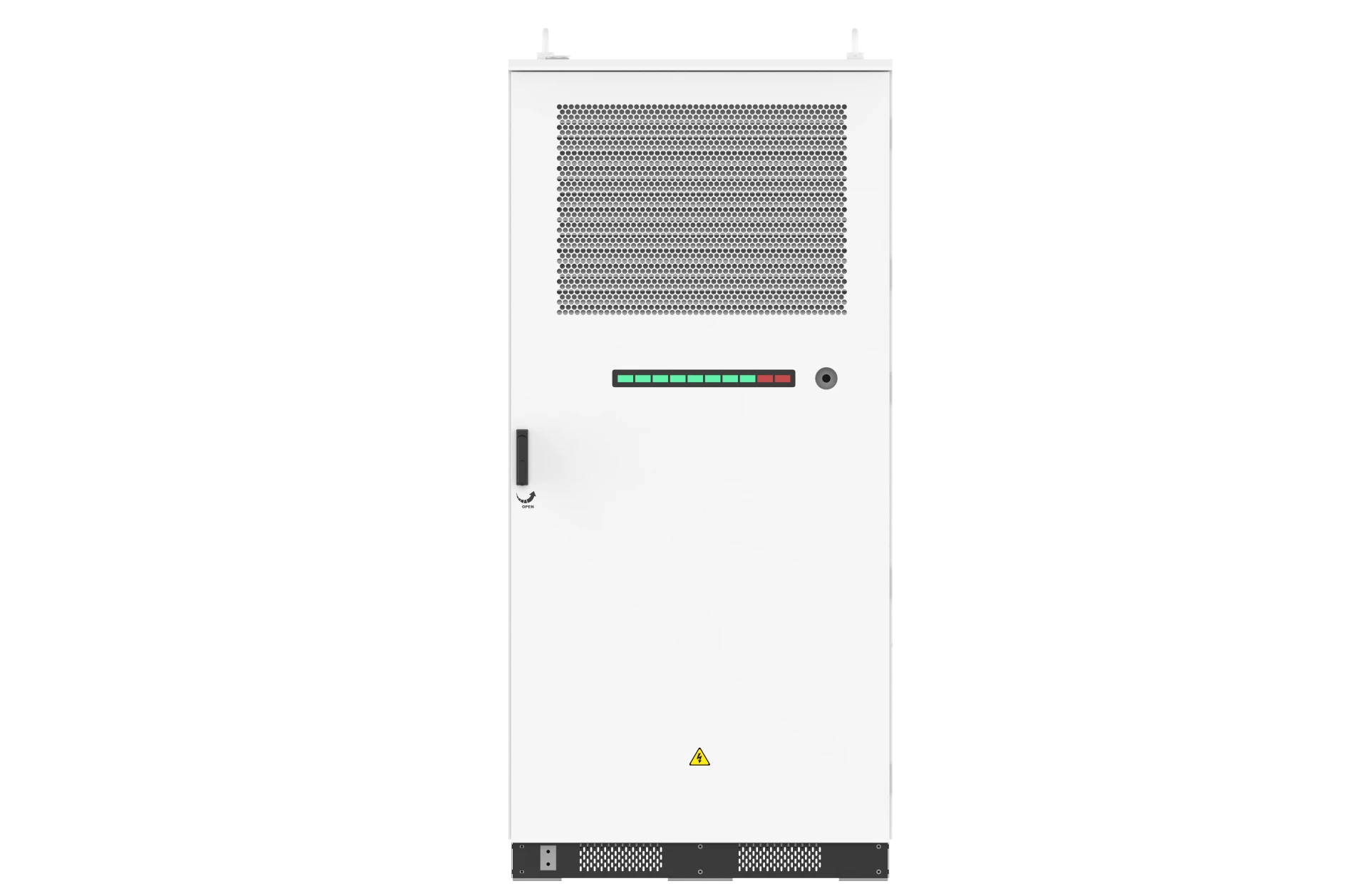
Emaldo PL-EL-125/261-G-PS100
125 kW / 261 kWh commercial battery with an integrated 100 kW solar inverter for efficient utilisation of self-generated power.
The basics
What does solar energy storage mean?
A battery storage system paired with solar PV captures generation that the property cannot use immediately. This energy can be discharged later for self-consumption. Self-consumption rate indicates how much of your solar generation is used on site; self-sufficiency rate indicates how much of your total consumption is covered by your own generation.
When is it worth getting a battery for a solar PV system?
- Significant surplus generation is frequently exported to the grid
- Consumption continues into the evening or night after solar generation ends
- The same battery can also be used for peak shaving
- You want to integrate an existing solar PV system into smart energy management
- You want to combine a battery and a hybrid solar inverter in a new installation
Sizing
Sizing by matching generation and consumption
Battery capacity should not be sized solely on the solar PV system's peak rating (kWp). You need concurrent generation and consumption profiles alongside data on surplus electricity sold to the grid.
- 1Hourly or 15-minute solar PV generation
- 2Site consumption across the same periods
- 3Volume of surplus electricity exported to the grid
- 4Evening and nighttime consumption to which energy can be shifted
- 5Other use cases: demand charges, backup power and grid reserve markets
You don't need to store all surplus generation
An oversized battery may sit underutilised for parts of the year. Economical sizing takes into account seasonal variation, round-trip efficiency losses, other battery use cases, and the spread between electricity import and export prices.
Frequently asked questions
Questions about energy storage
Can a battery be retrofitted to an existing solar PV system?
Often yes, but the method depends on your existing inverter, electrical installation and chosen battery system. Compatibility is verified during the site assessment.
What is the difference between self-consumption rate and self-sufficiency rate?
Self-consumption rate measures the share of your on-site generation used on the property. Self-sufficiency rate measures what proportion of the property's total electricity demand is covered by your own generation.
Is the battery sized according to the solar PV system's kWp rating?
Not on its own. What matters is how much surplus is generated and how much consumption occurs later during the same or following usage cycle.
Can a solar battery also be used to lower demand charges?
Yes, provided the control system and available capacity also reserve battery storage for anticipated consumption peaks.
Sources and updates
Content reviewed 8.10.2026. Market terms, tariffs and technical suitability are always checked for each site.
Knowledge hub
Read more on this topic
- Home battery or solar panels first?Solar panels generate electricity during the day; a battery shifts it to the evening. Which one you should get first depends on what drives your electricity bill.Households · 3 min read
- How much does a home battery save?The profitability of a home battery should not be assessed on purchase price alone. What matters is the total benefit: how much the battery reduces electricity purchases during expensive hours and how much it earns in the Emaldo Grid Rewards programme.Households · 4 min read
Savings calculator
Size your energy storage system to suit your site
Estimated demand charge savings, price arbitrage and payback period. Prices VAT 0 %.
Estimated annual benefit · VAT 0 %
10 148 €/v
We recommend: Emaldo PL-EL-100/209 · 100 kW / 209 kWh
- Huipunleikkaus (tehomaksu)−14,5 kW620 €
- Price arbitrage (energy)2 403 €
- Transmission + tax, including efficiency losses−375 €
- Reservimarkkinat (Floor/Market/Tolling)7 500 €
Assumption: 250 cycles/year, discharge period 2 h, peak 121 kW, data: Esimerkkidata: FI-aluehinnat 10/2025–9/2026.
Request precise sizingSources: Caruna Oy price list 1.9.2024; Caruna Espoo 1.1.2026; Elenia large customer price list 1.4.2026 (product names inferred from the PDF, check the source); electricity tax from Elenia's 1.4.2026 price list. Helen Sähköverkko's business price list has not been verified: use 'Custom tariff'. Spot data: Nord Pool FI area prices (Elering, valitsesahko.fi), monthly average prices 10/2025–9/2026 and hourly profiles for January, April and July 2026 and October 2025, excluding VAT. Profiles for other months are derived from the nearest seasonal profile, so day-to-day variation is missing and the arbitrage estimate is a conservative lower bound. Prices are historical, not forecasts. Industry profiles are approximations, not measured data; actual peaks are often sharper. Reserve market revenues: Floor 55 000 €/MW/year and Tolling 75 000 €/MW/year (Watti, 8.10.2026), Market estimate varies (benchmark Clean Horizon Battery Index 2h). The model excludes load control, electricity storage tariffs offered by distribution network operators and financing costs. All prices VAT 0 %.
Read more